What is an anti-drone system and how does it work?
In the context of increasingly popular drones, anti-drone systems have become an important solution to detect, prevent and neutralize illegal drones. So how does anti-drone technology work? Let’s find out in detail in this article!
1. What is an anti-drone system?
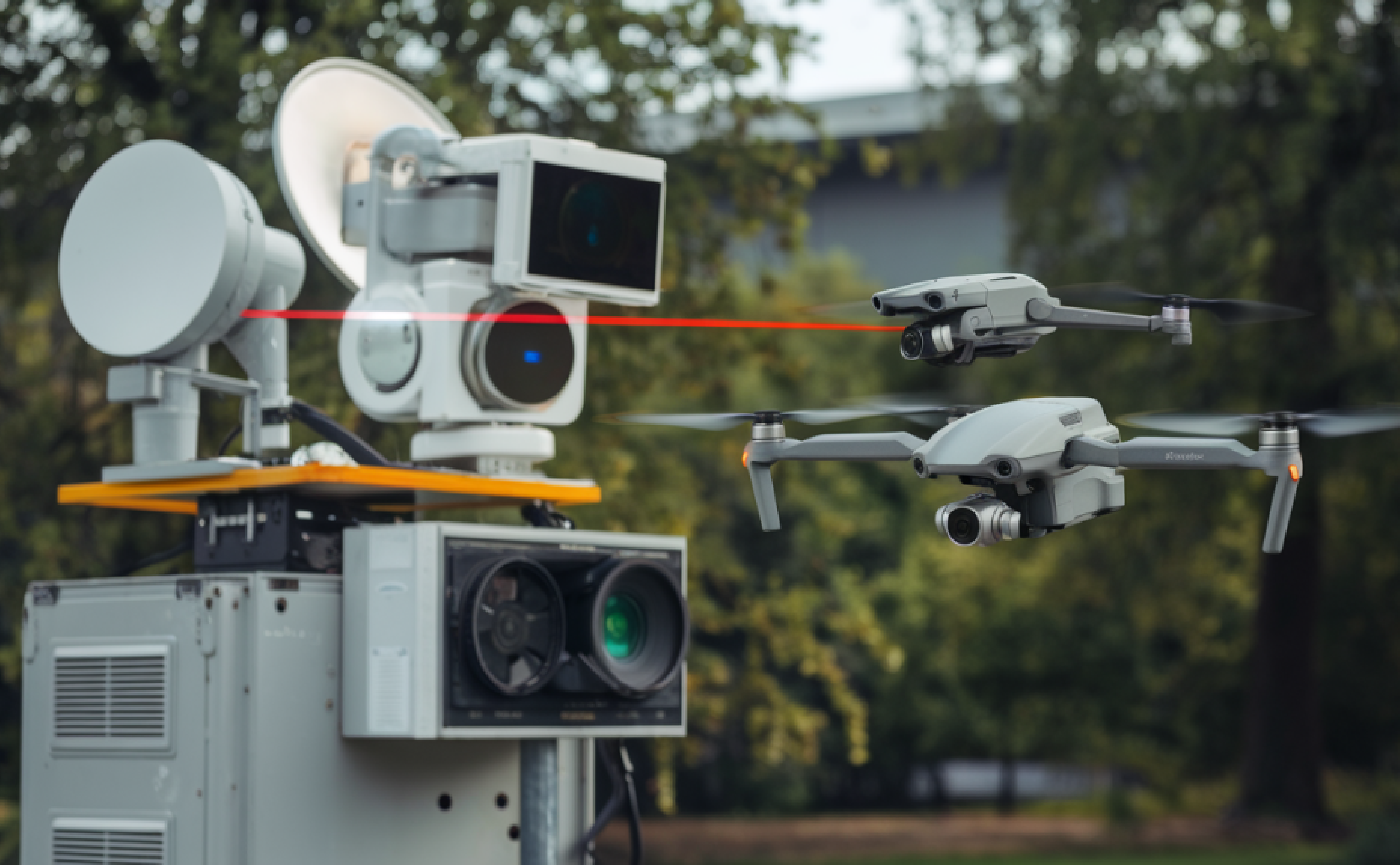
In essence, a Counter-Unmanned Aircraft System (C-UAS) is a set of technologies and methods designed to detect, track and neutralize unwanted drones. The main goal of these systems is to protect people, property and airspace from illegal drone use, which endangers safety, privacy and regional security.
Anti-drone systems are designed to detect and neutralize illegal drones – Photo: The Defense Post
As the capabilities of drones continue to expand, the purposes for exploiting and exploiting them are also becoming more sophisticated. Some common threats that illegal drone use can cause include:
Espionage: Drones can be exploited to collect sensitive information, invade privacy, and pose a risk of data leakage or security breaches.
Smuggling: In many cases, drones are used to illegally transport goods across borders or into restricted areas, bypassing traditional controls.
Air Traffic Disruption: Drones flying near airports can pose a danger to manned aircraft, increasing the risk of collision and affecting aviation operations.
Given these risks, deploying anti-drone systems has become a necessary solution to protect airspace areas. These systems often apply a multi-layered protection method, integrating multiple layers of anti-drone technology including detection and neutralization to create a comprehensive defense strategy.
2. How anti-drone systems work
A basic anti-drone system typically includes several key anti-drone technologies, closely linked to detect and respond promptly to unlicensed drones. Specifically:
Drone detection technology
The first step in neutralizing drone threats is to detect them. Counter-drone systems (C-UAS) often apply a variety of technologies to detect drones in the surveillance area. Common methods include:
Radio frequency detection (RF Detection): Drones often communicate with the operator via radio waves. The anti-drone system is equipped with an RF sensor that scans and identifies the signals emitted by the drone, allowing early warning without direct intervention.
Drone detection system applies radio wave detection technology between the drone and the operator – Photo: MDPI
Radar system: Radar technology can detect drones from a long distance even in environments with many obstacles. By emitting radar waves and analyzing the reflected signals, the system can determine the location, speed, and trajectory of the drone. However, the radar still needs a noise filtering mechanism to avoid confusing the drone with other flying objects such as birds.
Optical and infrared sensors: Optical cameras and thermal sensors help visually identify drones. In low light or night conditions, the infrared sensor will detect the heat signal of the drone, supporting the confirmation that the target has been detected by radar or RF.
Acoustic sensors: This system uses a microphone to record the characteristic sound of the drone’s propeller. Acoustic sensors work best in quiet environments and are often combined with other detection methods.
Drone tracking and identification
After detection, the system will track and identify the characteristics of the drone to assess the level of danger. The main methods include:
Triangulation: Using multiple sensors placed at different locations, the system can accurately determine the location and flight path of the drone.
Integration with surveillance systems: Modern anti-drone systems can connect to surveillance cameras or air traffic control systems to monitor drones in real time.
Disabling drones
After identifying and tracking the target, the anti-drone system can deploy a variety of measures to disable unauthorized drones, including:
RF Jamming: Sending out interference signals to disrupt communication between the drone and the operator, forcing the drone to land or return to its starting point.
GPS Spoofing: Sending out fake GPS signals to fool drones, causing them to lose direction and fly out of restricted areas.